Why Bleach Is Not the Right Choice for Black Mold
The most common DIY mistake we see in Capital Region homes. Here's why bleach doesn't actually work — and what does.
Mold · Albany NY
Why Bleach Doesn't Work on Black Mold
This is the single most common DIY mistake we see in Capital Region homes. The homeowner finds mold, sprays it with chlorine bleach, the visible black disappears, and they think the problem is solved. Six months later they're calling us because the mold is back — often worse, often spread to areas that were previously fine.
Here's what's actually happening, and why bleach is the wrong tool for this job.
What Mold Actually Is
Mold is a multi-celled organism with two distinct components: the visible spore-producing growth on the surface, and a network of root-like structures called hyphae that penetrate into the substrate. On porous materials like drywall, wood, fabric, and carpet, hyphae grow into the material itself, sometimes inches deep.
To actually kill mold, you have to kill both the surface growth and the hyphae. Otherwise the surface dies, the hyphae stay alive, and the colony regrows.
What Bleach Actually Does
Chlorine bleach (sodium hypochlorite) is highly effective at sanitizing non-porous surfaces — countertops, sinks, hard floors. On those surfaces, mold doesn't really get hyphae penetration; the colony sits on top, and bleach kills it cleanly.
The problem is that bleach is mostly water (typically 90%+ water in household concentrations), and water is exactly what mold needs to live. On porous surfaces:
- The chlorine bleaches the visible black surface, making it look like the mold is gone
- The water portion soaks into the substrate, feeding the hyphae underneath
- The chlorine evaporates relatively quickly, while the water stays
- The hyphae, which were never really threatened by the bleach, now have additional moisture
- The colony regrows, often more aggressively than before
What This Looks Like in Real Capital Region Homes
We see this pattern repeatedly:
- Homeowner notices mold on basement drywall after a leak
- Sprays bleach, surface stain disappears
- Two to four months later, mold returns in the same spot — sometimes larger, sometimes adjacent
- Homeowner repeats the bleach treatment
- Cycle continues for a year or more
- Eventually the homeowner calls a remediation company because the smell is overwhelming or someone in the house is having symptoms
- Inspection reveals an established colony in the wall cavity, not just on the surface
By the time we're called, the remediation cost is much higher than it would have been if professional work had been done in the first place.
Bleach Also Has Other Problems
It bonds bleach to the substrate
Bleached drywall, bleached wood, and bleached fabric have absorbed chlorine that takes weeks or months to fully off-gas. During that period, indoor air quality is affected.
It gives false confidence
Homeowners who've "treated" mold with bleach often don't take additional steps — they don't address the moisture source, they don't remove affected materials, they don't test air quality. The treatment created an illusion that the problem was solved when it actually wasn't.
It can damage materials
Bleach is corrosive to metals, can fade and weaken fabrics, and can damage wood finishes. Materials that could have been salvaged with proper remediation may end up needing replacement after homeowner bleach treatment.
It produces hazardous fumes
Chlorine bleach plus other common cleaners (especially ammonia-based products) produces toxic chloramine gas. Homeowners trying to "clean better" by mixing products can create serious indoor air hazards.
What Actually Works
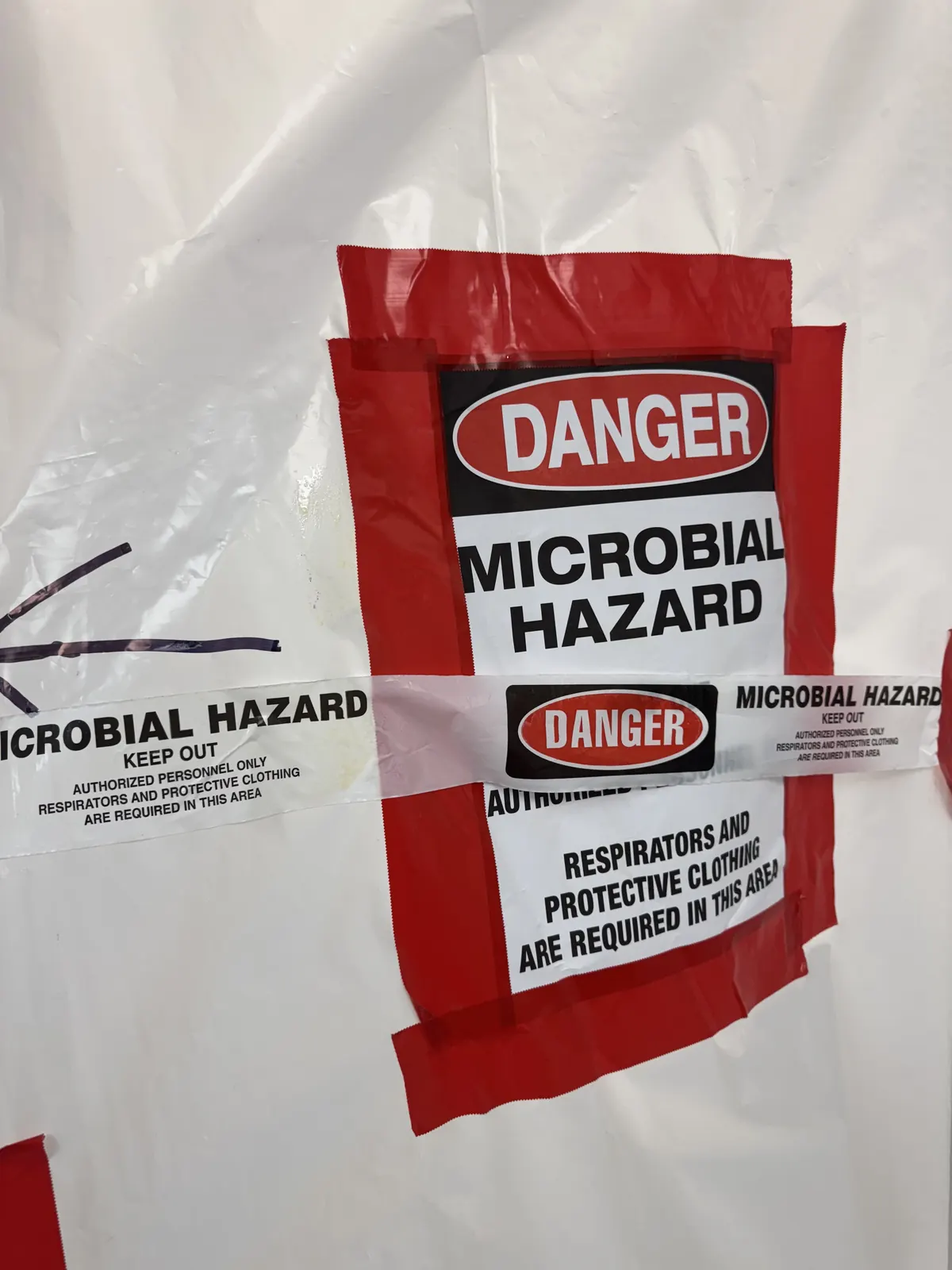
Professional mold remediation under IICRC S520 standards uses:
- Containment — physical barriers and HEPA scrubbers preventing spore migration
- Removal of porous materials with established hyphal growth
- HEPA vacuuming of semi-porous materials
- EPA-registered antimicrobials formulated specifically for mold roots on porous surfaces
- Source remediation — fixing the moisture problem so the colony doesn't return
- Post-remediation verification — testing to confirm the work was effective
The chemicals used in professional remediation are different from anything available to consumers, and the techniques are different from anything that can be done with retail products. This is why mold work is a specialty service, not a DIY project.
If You've Already Used Bleach
You haven't made the situation unfixable, but you have likely created a recurring problem. The bleached surface won't tell us what's underneath, so we may need to remove the affected material to assess what's actually there. Be honest with the remediation contractor about what was done — it changes the inspection approach.
Going forward, the right move when you find mold is to call us before treating it. Call 518-788-7261. We'll inspect, identify the moisture source, scope the remediation, and handle it correctly the first time.