The Water Damage Restoration Process
IICRC S500 step-by-step — exactly what happens from initial call through final verification on every water damage job.
IICRC S500 Process
The Water Damage Restoration Process — Step by Step
Water damage restoration follows a documented industry standard called IICRC S500 — Standard for Professional Water Damage Restoration. Every IICRC-certified firm follows the same general framework, but execution quality is what separates jobs that come back from jobs that get done right the first time.
Here's exactly what happens, in order, on every water damage job we do.
Step 1 · Initial Call & Dispatch
When you call 518-788-7261, a real team member answers, gets the basics — what happened, where you are, how much water — and dispatches a crew. For most active emergencies in Albany, Schenectady, Saratoga, and Rensselaer counties, on-site arrival is within 60–90 minutes.
Step 2 · On-Site Inspection & Assessment
The lead technician walks the property to identify the water source, the affected area, and the materials involved. Three things are determined here:
- Water Category — Category 1 (clean), 2 (grey), or 3 (black). This determines safety protocols and which materials can be salvaged.
- Class of Damage — Class 1 through 4. This determines equipment count and drying time.
- Source containment — has the water source been stopped, and what additional steps are needed.
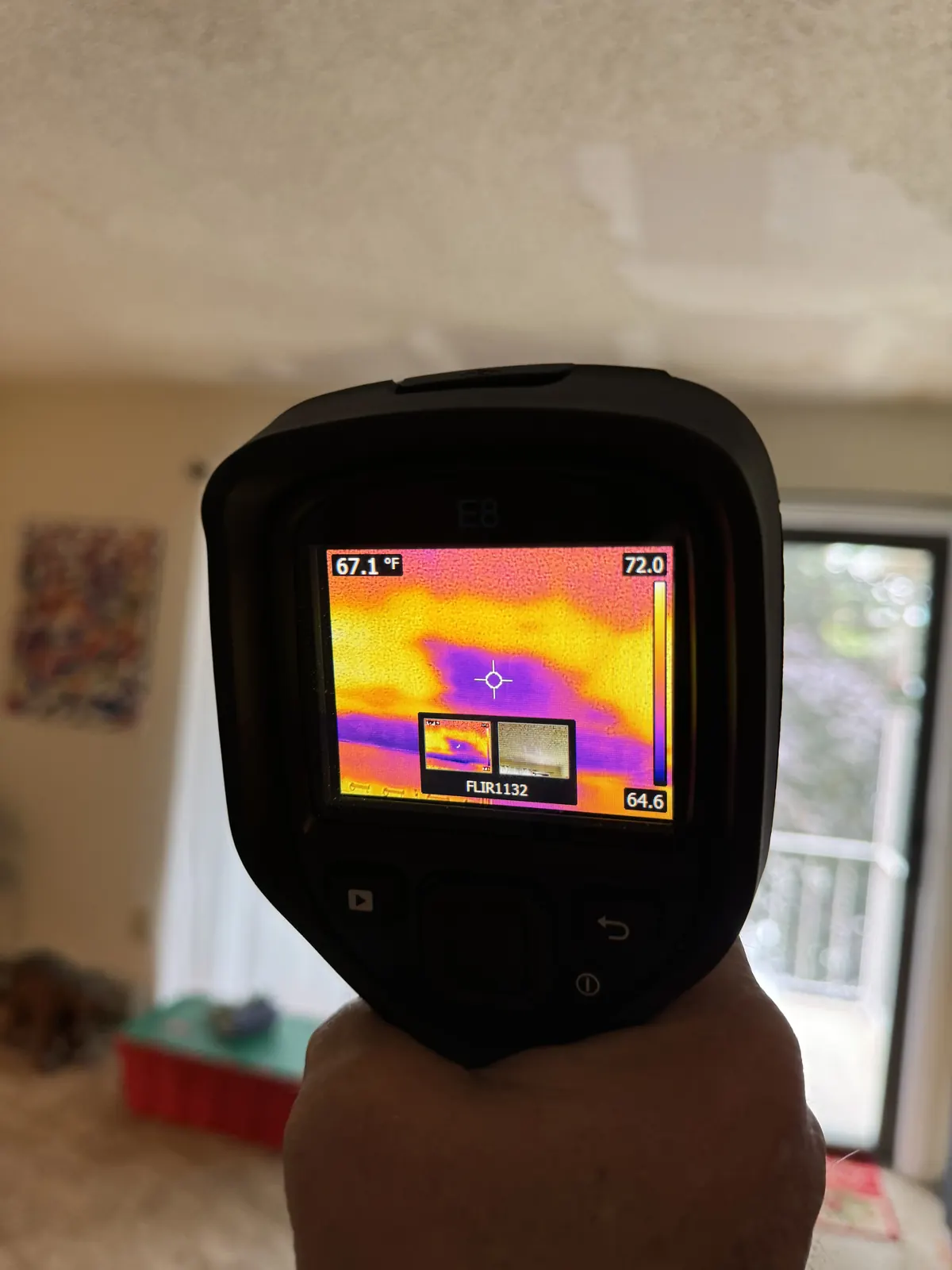
FLIR thermal imaging maps moisture inside walls and under flooring. Tramex moisture meters confirm what the thermal imaging shows. Initial readings are documented for the insurance file.
Step 3 · Water Extraction
Standing water and water absorbed into porous materials gets extracted with truck-mounted equipment. Water extraction at this stage is the highest-leverage activity in the entire process — every gallon removed is a gallon that doesn't have to be dried out of materials over the next several days.
Step 4 · Strategic Demolition (Only When Needed)
The IICRC standard is to remove only what cannot be effectively dried in place. Saturated insulation, swollen drywall, and sub-flooring that has lost structural integrity come out. Materials that can be dried in place — most framing, most hardwood, most concrete — stay in place.
Flood-cuts of drywall (a 2–4 inch strip removed at the bottom) release trapped moisture and accelerate drying without unnecessary tear-out. We don't demolish more than necessary.
Step 5 · Antimicrobial Treatment
For Category 2 or 3 water losses, antimicrobial treatment is applied to all affected surfaces before drying begins. This prevents biological growth during the drying period when conditions remain favorable for it.
Step 6 · Structural Drying
Commercial dehumidifiers and air movers establish a controlled drying environment. Equipment count is calculated by IICRC formulas based on Class of damage and affected square footage. Equipment runs continuously — typically 3–5 days for residential basement work.
Step 7 · Daily Monitoring
Every day during active drying, a technician returns to:
- Take moisture readings on every affected surface
- Compare to drying targets and previous-day values
- Reposition equipment to focus on slow-drying areas
- Remove equipment from areas that have hit target
- Document all readings for the insurance carrier
Step 8 · Verification & Equipment Removal
Equipment doesn't come out until moisture content has reached target on every affected surface. For drywall and framing this means equilibrium with surrounding unaffected material. For sub-floor and hardwood it means full equilibrium with unaffected reference points.
Premature equipment removal is the single most common cause of secondary mold growth. We don't do it.
Step 9 · Final Walkthrough & Documentation
The homeowner walks the property with the lead technician. Every drying log, moisture reading, and photo is compiled into a documentation package for the insurance carrier. The job is closed and the homeowner gets a copy of everything.
Step 10 · Reconstruction (Separate Phase)
Once drying is complete, reconstruction can begin — drywall replacement, flooring re-installation, painting. The Dry Boys can coordinate trusted reconstruction partners or work with the homeowner's preferred contractor. Reconstruction is its own phase with its own scope, separate from the restoration work itself.