Tips on Water Damage Restoration
Field-tested practical guidance from Capital Region restoration work — the kind of tips that don't usually make it into formal literature.
Water Damage · Albany NY
Practical Tips From Capital Region Restoration Work
After thousands of jobs across the Capital Region, certain patterns repeat. Some things homeowners do help. Some things homeowners do make the situation worse. This page collects the field-tested tips we've ended up giving over and over — the kind of practical guidance that doesn't usually make it into formal homeowner literature.
Tip 1 · Find Your Main Water Shut-Off Now, Not Later
Almost every homeowner with a burst pipe loses precious minutes finding the main shut-off in the panic of the moment. Locate it now. Make sure it actually works — it's not unusual for a never-used valve to be seized. If yours doesn't turn easily, have a plumber replace it before you need it.
Tip 2 · The Hose Behind Your Washing Machine Is a Time Bomb
Standard rubber washing machine supply hoses have a documented failure rate that increases sharply after 5 years and dramatically after 7. Stainless-steel braided hoses cost about $20 each, take 10 minutes to install, and can prevent a $20,000 claim. Replace them on a schedule.
Tip 3 · Test Your Sump Pump in March, Not in April
Most sump pump failures we respond to happen in March and April when snowmelt and spring rain arrive at the same time. The pump hasn't run all winter, and when it's needed, it doesn't start. Pour a 5-gallon bucket of water into the sump pit each March to verify the pump cycles properly. If it doesn't, you have a few weeks to address it before the real test.
Tip 4 · Add Water Backup Coverage to Your Policy
Standard homeowners policies generally exclude sewer backup and sump pump failure. The "Water Backup and Sump Pump Overflow" endorsement is typically $40–80 per year for $5,000–10,000 of coverage. Most homeowners don't know they don't have it. If you have a basement, you almost certainly want it.
Tip 5 · Document the State of Your Home Before Water Damage Happens
An annual or biennial walk-through video of the house — every room, every closet, every storage area — is the single most useful thing homeowners can have when filing a claim. It establishes pre-loss condition and contents. We've seen many claims handled smoother because the homeowner had a video from six months prior.
Tip 6 · Don't "Fix It Cheap" After Water Damage
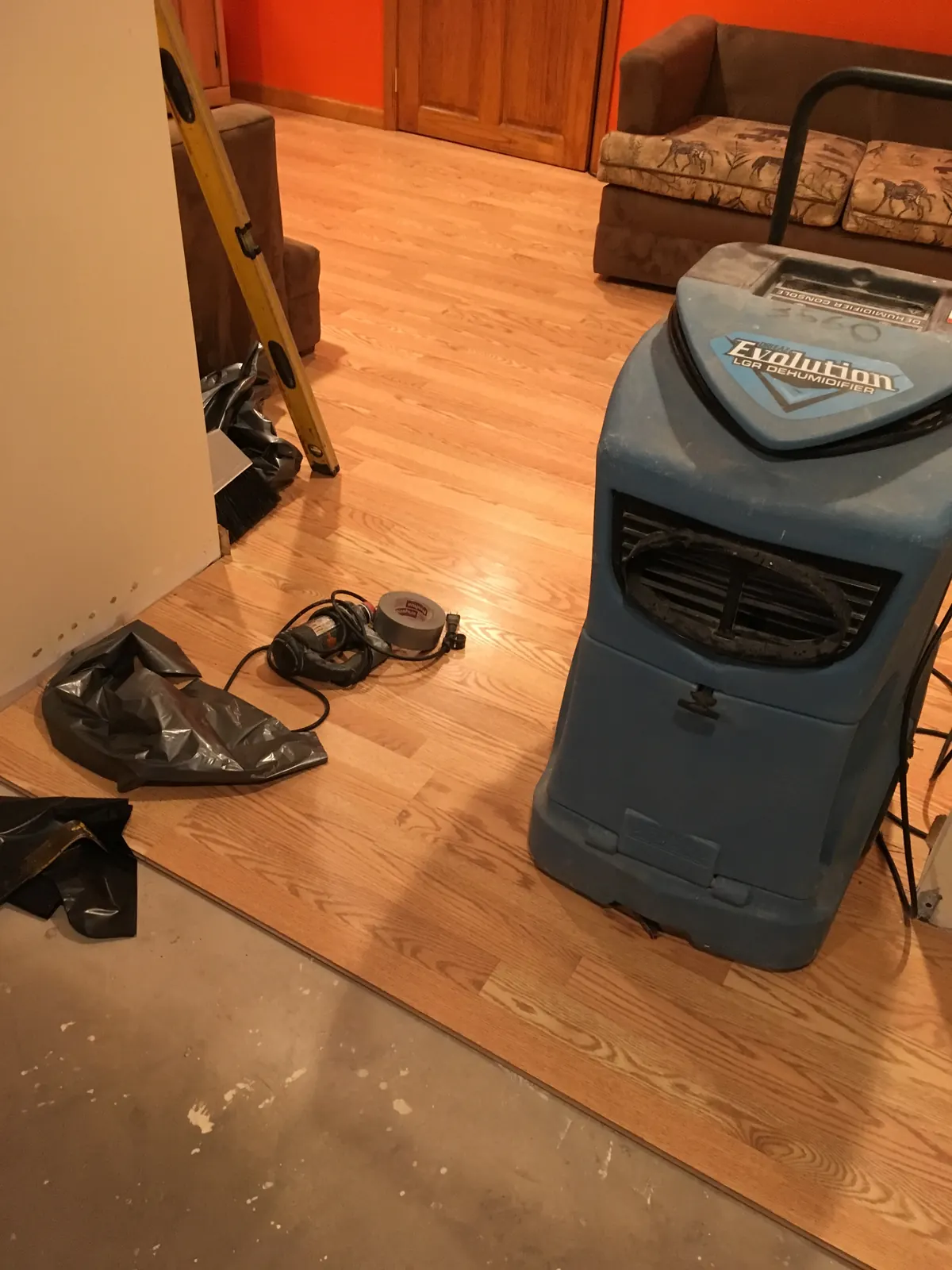
The number-one driver of secondary mold growth is premature termination of drying. The contractor wants to free up equipment for the next job. The homeowner wants the inconvenience over. The drying equipment comes out at day 3 instead of day 5. Six months later we're back to remediate the mold that grew because the framing wasn't actually dry.
The right contractor uses moisture meters to make the call, not a calendar. Insist on documentation of final moisture readings.
Tip 7 · Bleach Is Not a Mold Solution
This is the most common DIY mistake we see. Chlorine bleach bleaches the visible black surface of mold — but the colony's roots stay alive in porous materials, the bleach evaporates, and the mold returns. Worse, bleach gives homeowners false confidence that they've solved the problem while the colony continues spreading inside the wall.
Professional antimicrobials used in IICRC S520 work are formulated for mold roots on porous and semi-porous materials. They're available to remediation crews but generally not to consumers — and that's actually fine because the right mold work is more than just the right chemical.
Tip 8 · The Smell of Musty Doesn't Go Away on Its Own
If a basement, closet, or room has had a musty smell for more than a few weeks, there's an active moisture problem somewhere. Maybe a slow leak. Maybe condensation. Maybe foundation seepage. The smell is the early warning system. Address the moisture source — and the materials that have been wet — before the problem becomes visible.
Tip 9 · Insurance Adjusters Are Not Your Adversary, But They're Not Your Advocate Either
The adjuster's job is to determine what's covered under the policy, evaluate the scope, and authorize payment within the policy limits. They're not trying to deny the claim, but they're also not trying to maximize what you receive. The documentation matters because it determines what gets approved. Working with a restoration contractor experienced in insurance work means the documentation is set up the way the carrier needs to see it.
Tip 10 · Save Every Receipt
Hotel stays, restaurant meals when your kitchen is unusable, replacement clothing when your closet is wet, child care when you're dealing with the situation, dry cleaning, fuel for trips back and forth. All of this is reimbursable as Additional Living Expenses under most policies. But you have to document it. Save receipts. Note the reason on each one.
Tip 11 · Photograph the Pre-Existing Condition of Anything Adjacent to Damage
Before the contractor starts work, photograph the boundary between the affected and unaffected areas. This protects you if there's later disagreement about what was damaged before vs. during the work. It also helps the adjuster understand the existing condition.
Tip 12 · Ask Questions. All of Them.
If you don't understand something, ask. What does this scope item mean. Why is this material being removed. How are you calculating equipment days. What's the target moisture content for completion. What documentation will I receive. Any reputable contractor welcomes questions because they signal an engaged client and protect both sides from misunderstandings later.