Sewer & Sewage Backup Cleanup
Category 3 black water — handled safely with full PPE, containment, and IICRC S500 decontamination protocols across the Capital Region.
Category 3 Black Water
Sewer Damage Cleanup in Albany NY — Handled Safely
Sewage backup is the single most dangerous water emergency a homeowner faces. The IICRC classifies it as Category 3 black water — water that contains pathogens, bacteria, viruses, parasites, and chemicals that can cause serious illness through contact, inhalation, or accidental ingestion. This is not a job for a shop vac and a bottle of bleach.
The Dry Boys of Albany handles sewage and Category 3 cleanup across the Capital Region with full PPE, containment, biocide treatment, and structural decontamination per IICRC S500 standards. We arrive prepared — and we arrive fast.
What's Actually In Sewage Backup Water
Raw sewage carries a documented list of biological hazards including E. coli, salmonella, hepatitis A, rotavirus, norovirus, and parasitic worms. Plus household and industrial chemicals from upstream sources. Plus whatever the sewer line happened to be carrying at the time of backup.
This is why DIY sewer cleanup is genuinely dangerous. Splashing water into the eyes, breathing aerosolized droplets while extracting, or skin exposure through cuts can cause infections that send people to the emergency room. Professional crews wear full Tyvek suits, respirators, gloves, and eye protection — and we still treat every sewage scene as a contaminated work area.
Common Capital Region Sewer Backup Causes
- Tree root infiltration — older Albany, Troy, and Schenectady neighborhoods with mature trees often have lateral lines compromised by roots
- Heavy rain overwhelming municipal lines — combined sewer overflow systems in older parts of the region back up during heavy storms
- Failed sewer ejector pumps in below-grade plumbing
- Frozen/ruptured sewer laterals in winter
- Grease and flushable-wipe blockages in the lateral or municipal main
- Backflow without a check valve when municipal pressure surges
Our Sewer Cleanup Process
Source isolation
First step is making sure no additional sewage is entering the affected area. We work with the homeowner to stop all water use in the house. If the source is municipal, we coordinate with the local water/sewer department for line clearing.
Containment & PPE
The contaminated area is sealed off with poly sheeting and HVAC supplies/returns are blocked to prevent contamination spread through ductwork. Crews suit up in full Tyvek with PAPR or N95 respirators depending on the contamination level.
Extraction & gross removal
Sewage is extracted with truck-mounted equipment. Solid waste, sludge, and contaminated debris are bagged and disposed of as biohazardous material. Porous materials that contacted Category 3 water — carpet, pad, drywall to flood-cut height, insulation — must be removed and disposed of. They cannot be salvaged regardless of how they look.
Cleaning & biocide treatment
All hard surfaces are HEPA-vacuumed, then cleaned with hospital-grade detergent, then treated with EPA-registered antimicrobial agents specifically rated for sewage decontamination. Multiple passes are typical.
Structural drying
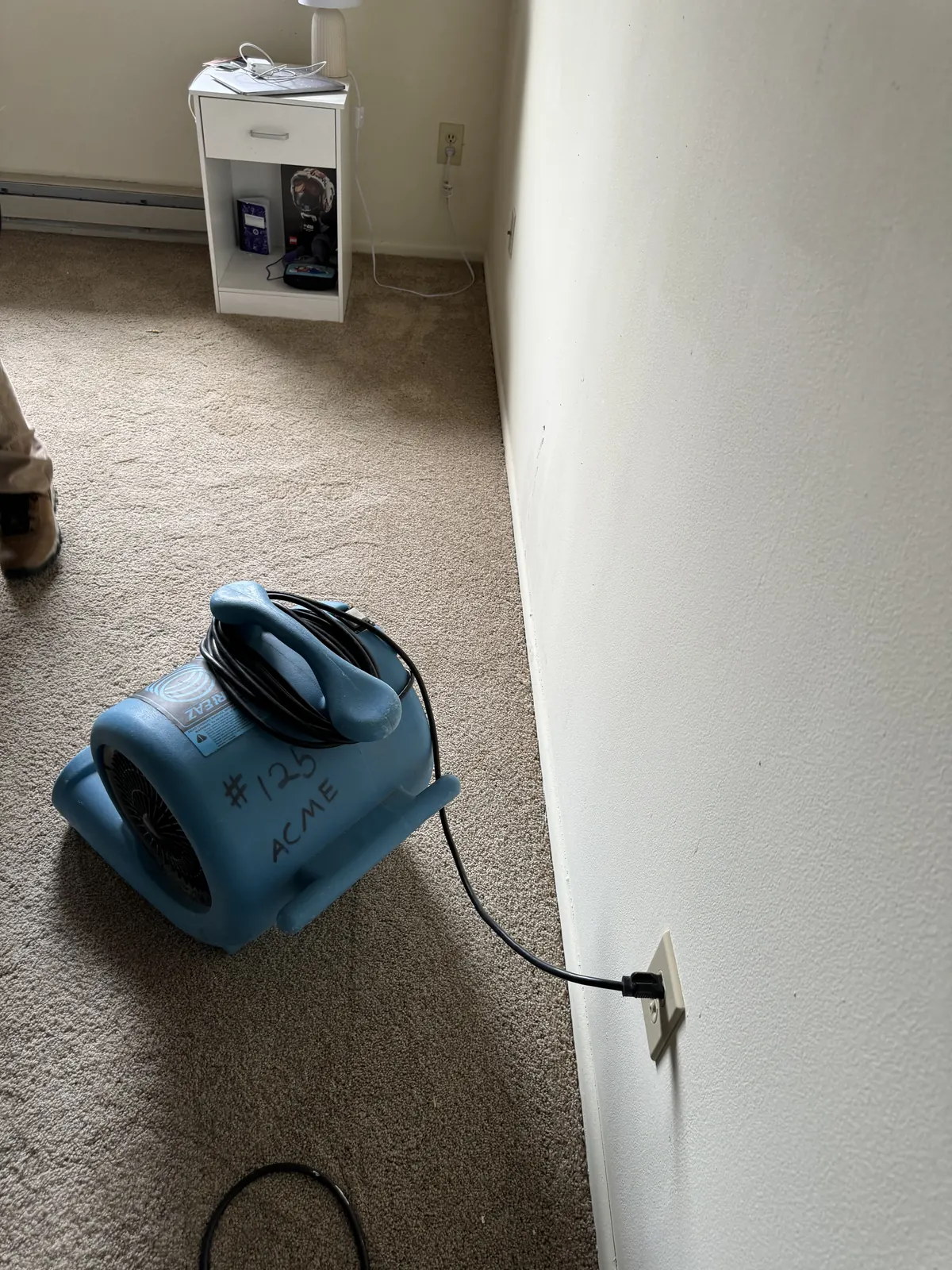
After decontamination, the area is dried using the same protocols as any Category 1 water loss — commercial dehumidifiers, air movers, daily moisture monitoring. Drying must be complete before any reconstruction begins.
Verification
For sewage jobs we recommend post-remediation surface sampling when there's any uncertainty about contamination spread. Lab results confirm decontamination before the homeowner re-occupies the space.
Insurance & Sewer Backups
Standard homeowners insurance generally excludes sewer backup unless a specific endorsement (often called "Water Backup and Sump Pump Overflow" coverage) was added to the policy. The endorsement is usually inexpensive — typically $40–80/year for $5,000–10,000 of coverage — but most homeowners don't realize they don't have it until they need it.
If you don't have the endorsement, the cleanup is out-of-pocket, but the property damage from resulting mold and structural issues may still be covered under the general policy. We document every sewage job carefully so claims that can be filed get filed properly.
What to Do Right Now if You Have Sewage in Your Home
- Stop using all water in the house immediately. Don't flush, don't run faucets, don't run the dishwasher or washing machine.
- Keep people and pets out of the affected area. Don't try to "clean it up yourself first" — you'll spread contamination.
- Don't run the central HVAC. The system will pull aerosolized contaminants throughout the house.
- Call us at 518-788-7261. We'll dispatch a crew and walk you through what to do until we arrive.
Ready When You Are
Request a Free Estimate for This Service
Same-day callback, free on-site assessment, direct insurance billing on covered claims. Real humans on every call at 518-788-7261.
Why homeowners across the Capital Region call us
The Dry Boys of Albany handles water damage, mold, and structural drying jobs from Albany, Troy, Schenectady, and Saratoga Springs out to Glens Falls, Hudson, Amsterdam, and beyond. IICRC-certified crews, and equipment sized to the job.
Related Reading
Understanding Sewer Backups Before They Happen
Sewer backups are the most dangerous water emergency a homeowner faces. If you're researching this topic before there's an active emergency, our full Sewer Backup Guide for Capital Region Homeowners covers common causes, warning signs, prevention steps, insurance coverage, and what to do the moment you spot the first sign of trouble.
Read the Full Sewer Backup Guide →