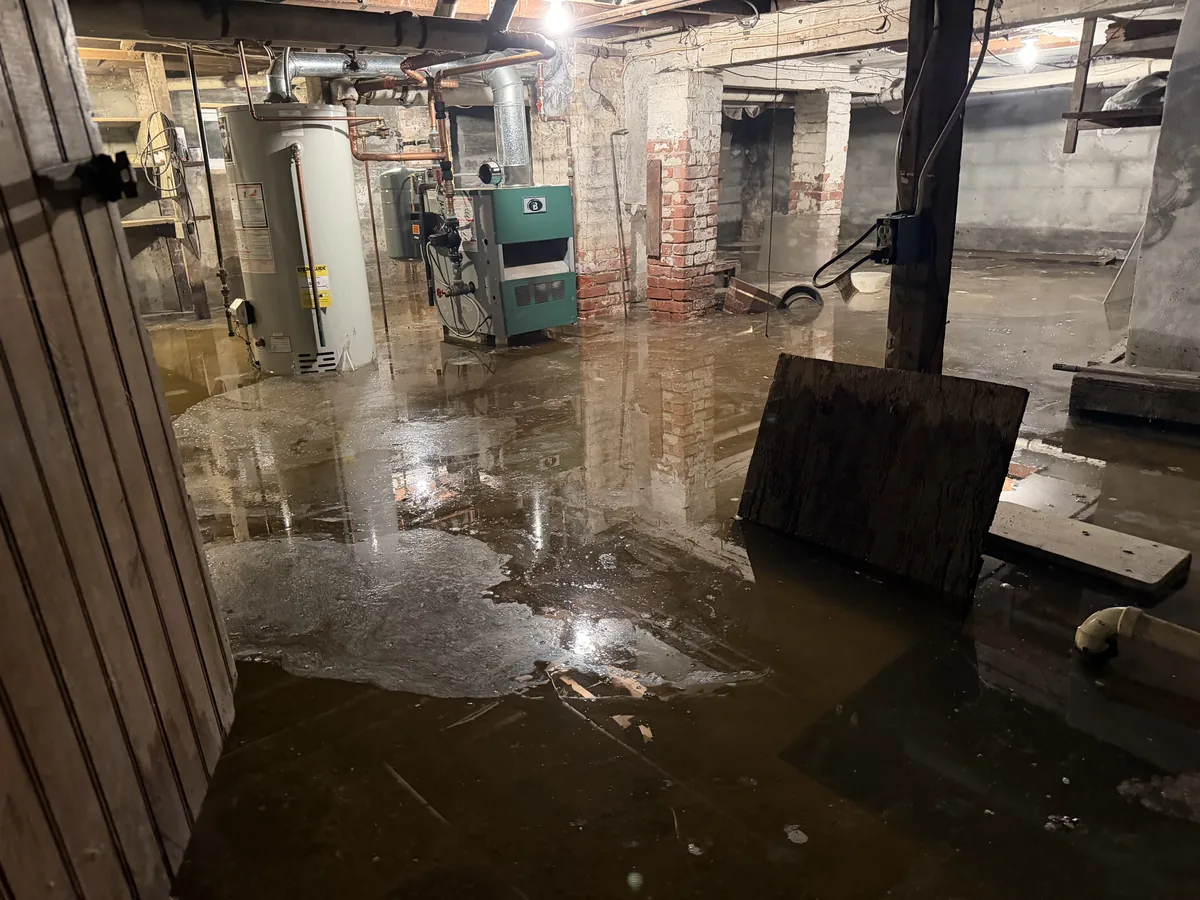
What to Do When Water Damage Occurs
The first-hour practical guide. The right actions save thousands of dollars; the wrong ones make things significantly worse.
Water Damage · Albany NY
The First Hour — A Practical Guide
Water emergencies start fast and chaotic. Most homeowners have no plan and no time to develop one. This page is the practical guide for the first hour — the time when the right actions can save thousands of dollars and the wrong actions can make things significantly worse.
Step 1 · Make Sure Everyone Is Safe
Get people and pets out of the affected area first. Standing water plus electricity is the single biggest hazard. If you can do it safely, kill power to the affected area at the breaker panel. If the panel itself is in a flooded basement — don't go down there. Call the utility, call us, and wait.
Step 2 · Stop the Source If You Safely Can
This depends on the water source:
- Burst pipe: Shut off the main water valve to the house. It's usually in the basement near where the water line enters, or outside near the meter.
- Appliance leak: Shut off the supply valve behind the appliance. Dishwashers and washing machines usually have valves under the sink or behind the unit.
- Sewer backup: Stop using all water in the house immediately. Don't flush, don't run faucets, don't run the dishwasher. Every gallon used adds to the backup.
- Roof leak / storm damage: Catch water with buckets and tarps. Move what you can away from the drip path.
- Sump pump failure: If you have a backup pump, deploy it. If not, manual extraction with whatever's available until professional help arrives.
Step 3 · Call Us
Call 518-788-7261. A real person will pick up, take the basics, and dispatch a crew. Most calls in Albany, Schenectady, Saratoga, and Rensselaer counties get on-site help in under 90 minutes. Calling early — even before you fully understand the scope — is almost always the right move.
Step 4 · Document While You Wait
Take photos and video of everything before you move it. Insurance adjusters want to see the damage in place. Wide shots of the room. Close-ups of damaged contents. Photos of the source if visible (the burst pipe, the leaking appliance, the failed sump pump).
Step 5 · Move What You Can Move Safely
If safely possible, move dry contents out of the affected area to protect them. Lift heavy furniture onto blocks of wood or styrofoam to break contact with wet flooring. Pull rugs off the floor and hang them somewhere they can drain. Open windows and doors to start ventilation if outdoor air is dry.
Step 6 · Notify Your Insurance Carrier
Open the claim. Most policies require prompt notification, and starting the process early means the adjuster is engaged from the beginning. Get the claim number and the adjuster's contact information — they'll be referenced throughout the work.
Don't Do These Things
- Don't enter standing water with power on in the affected area
- Don't use a household vacuum on wet surfaces — they're not built for water
- Don't run the central HVAC if you suspect mold or sewer contamination
- Don't use bleach on visible mold — it doesn't work on porous surfaces and gives false confidence
- Don't try to dry it out yourself with box fans — that's not drying, it's moving wet air around
- Don't wait it out — every hour matters
What to Expect When the Crew Arrives
The first thing the lead technician will do is walk the property to identify the water source, the affected area, and the materials involved. Thermal imaging and moisture meters get used to map what's wet — including areas that aren't visibly affected from the surface. Initial documentation gets logged for the insurance file.
Then extraction starts. Truck-mounted equipment moves water in volumes that are impossible with consumer equipment. Most residential basements can have standing water removed in under 90 minutes. Strategic demolition (only what's needed) releases trapped moisture from wall cavities. Drying equipment gets set up — commercial dehumidifiers and high-velocity air movers calculated to the affected square footage.
The crew leaves equipment running and returns daily to monitor moisture readings, reposition equipment, and remove what's done. The job is complete when moisture meters confirm target moisture content on every affected surface — not before.
When you have water damage in your Capital Region home, the right move is to call early, document everything, and let a professional crew handle the work. We answer the phone any hour — 518-788-7261.