Understanding Fire Damage Restoration
Fire damage is actually three problems — direct fire, smoke and soot, and water from firefighting. Each requires its own treatment.
Fire & Smoke · Albany NY
Fire Damage Is Three Problems, Not One
Most people think of fire damage as the burned part of the house. In reality, every fire damage event has three distinct components that all have to be addressed: the fire itself, the smoke and soot, and the water from the firefighting effort. Each behaves differently, requires different treatment, and creates different long-term issues if handled badly.
Fire Damage
Direct fire damage is what most people picture — burned framing, charred surfaces, structural elements that have lost integrity. This portion is the most visible and usually the smallest in actual square footage. It's also the portion that requires structural inspection before any restoration work begins.
Heat-damaged framing that hasn't actually burned can still be compromised. Engineered lumber loses strength at lower temperatures than dimensional lumber. Steel connectors and fasteners can be heat-degraded even when the surrounding wood looks fine. A structural assessment is the first step.
Smoke & Soot Damage
This is usually the largest and most underestimated component. Smoke travels everywhere the building's air flowed during the fire — meaning smoke residue can affect rooms that the fire never reached. Different materials produce different smoke types:
- Wet smoke (low-temperature smoldering) — sticky, thick, hard to clean, strong odor
- Dry smoke (high-temperature flaming) — powdery, easier to clean but spreads further
- Protein smoke (kitchen fires) — nearly invisible, severe odor, bonds aggressively to surfaces
- Synthetic smoke (electronics, plastics, modern furnishings) — toxic residues, bonds to surfaces, requires solvent cleaning
Soot residue penetrates everything porous — fabrics, carpet, drywall, insulation, the inside of cabinets, behind switch plates. It bonds chemically to surfaces over time, becoming progressively harder to remove. Speed of cleanup matters here as much as in water damage.
Water Damage
Firefighting effort introduces large volumes of water into the building. A typical residential structure fire involves thousands of gallons of water applied through hoses. This water:
- Saturates structural materials throughout the affected and adjacent areas
- Mixes with smoke residue and chemicals to create heavily contaminated water (Category 3 in IICRC terms)
- Travels through the building via the path of least resistance — often into rooms the fire never reached
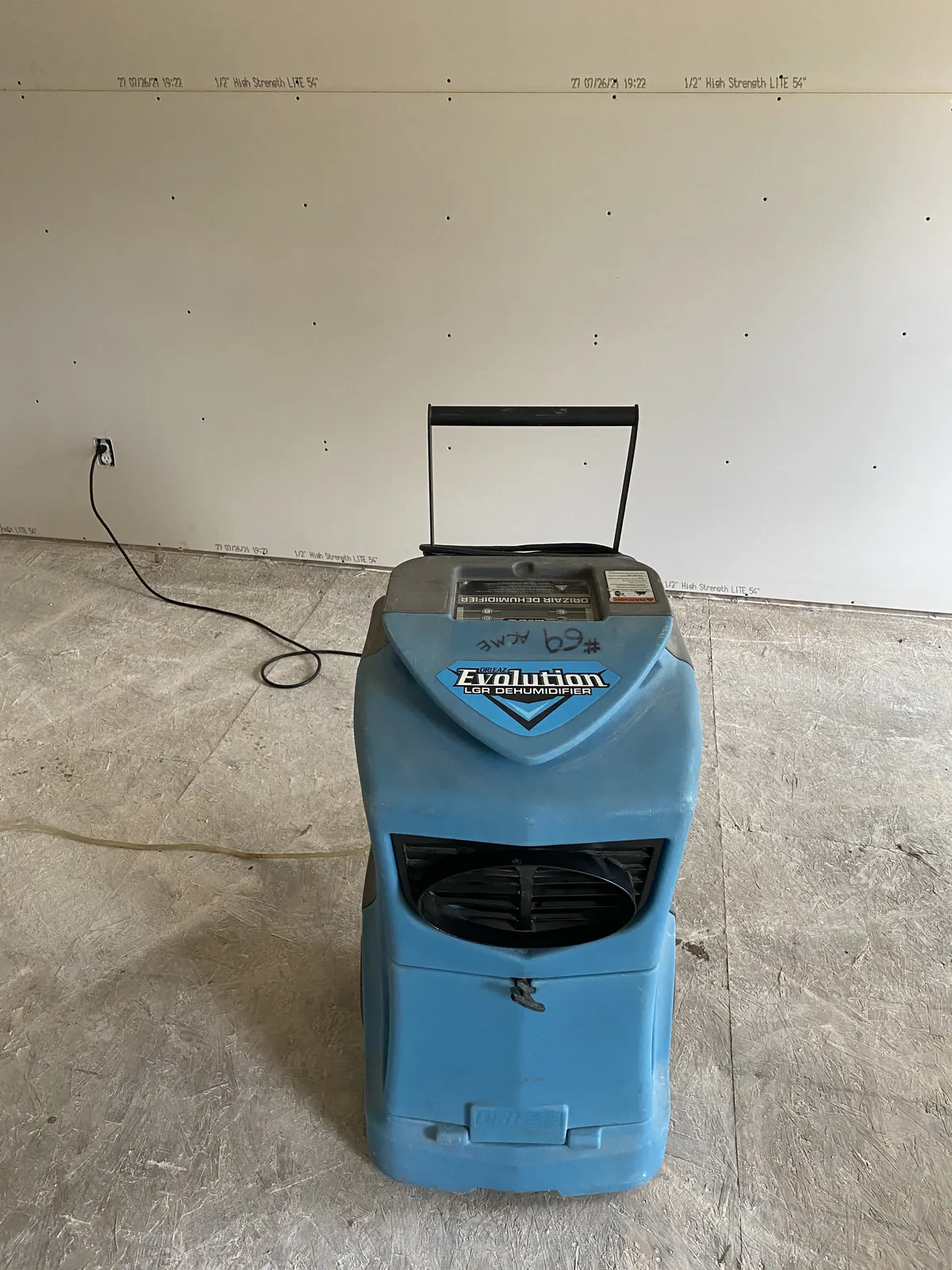
- Begins all the same hour-by-hour degradation discussed in our water damage timeline
Fire-fighting water is one of the reasons fire damage frequently affects much more square footage than the fire itself.
Why It Takes a Specialist Crew
The combination of fire, smoke, and water damage requires a coordinated response. The water has to be extracted and the structure dried before smoke remediation can be effective. Smoke remediation has to address not just visible soot but absorbed odor in materials. The structure has to be assessed for what can be saved and what is full tear-out. Insurance documentation has to track three separate damage types.
This is why fire damage restoration takes weeks to months for any meaningful damage event. It's not a quick job. But the work follows a structured sequence and a competent crew makes the timeline as short as possible.
The Insurance Side
Fire damage is generally well-covered under standard homeowners policies — but the claim process is more complicated than for a single-source water loss. Multiple types of damage means multiple line items in the scope, and the documentation has to be thorough enough that the carrier can adjudicate each component separately.
If you've had a fire in your Capital Region home, the immediate first calls are 911 and your insurance carrier. The next call should be a restoration contractor who can secure the building, document the damage, and start mitigation work before secondary issues compound the loss.