Storm & Flood Damage Restoration
Ice dams, burst pipes, sump pump failures, hurricane remnants, snowmelt flooding — every kind of Capital Region storm damage, handled fast.
Capital Region Storm Response
Storm & Flood Damage Restoration
Upstate New York gets every kind of weather, and each variety produces its own pattern of water damage. The Dry Boys of Albany has handled enough Capital Region storm seasons to know what's coming before the call comes in. We staff up before predicted storms, stage equipment in advance, and triage the worst calls first when the regional dispatch volume spikes.
The Capital Region Storm Calendar
Late winter — ice dams
February and March are ice dam season. Snow on the roof melts from heat loss, refreezes at the cold eaves, and creates a dam that backs water up under shingles. Water finds its way through nail penetrations and into ceilings, exterior walls, and the top of insulation.
Ice dam water damage is sneaky — it shows up on a ceiling 10 feet from the actual leak path, sits inside walls without showing on the surface, and almost always involves insulation that's now wet and useless. We map the actual water path with thermal imaging and dry the affected wall cavities, not just the visible ceiling stain.
Spring — snowmelt & sump pump failures
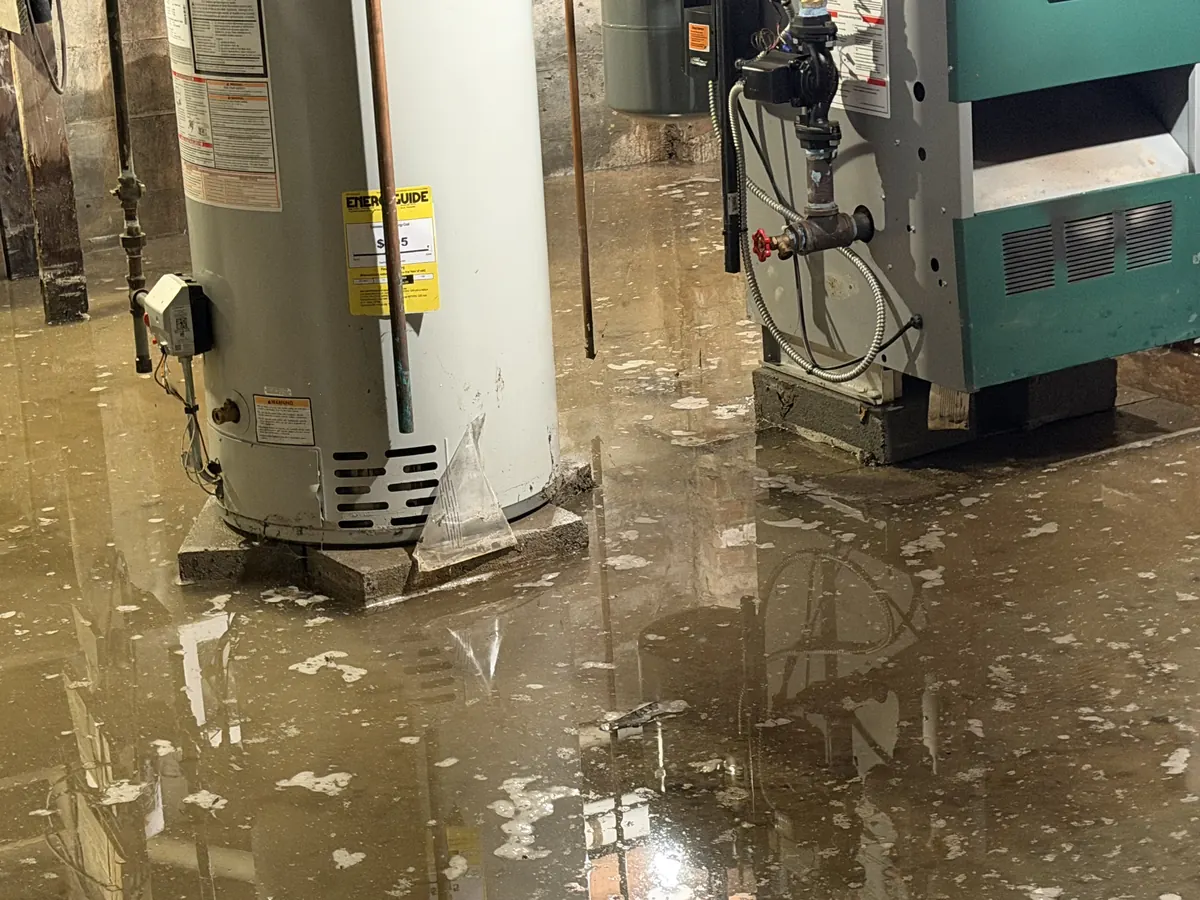
Late March through April brings rapid snowmelt combined with soil that's still frozen at depth. Water can't soak in fast enough, runs along the surface, and pushes into basements through foundation cracks, window wells, and sub-grade entries. Sump pumps that haven't run all winter often fail at exactly the moment they're needed most.
Spring is our highest-volume month. We routinely run multiple basement-flood crews simultaneously across Albany, Schenectady, Saratoga, and Rensselaer counties.
Summer — thunderstorm and hail damage
Severe summer storms drop two to four inches of rain in 60–90 minutes. Combined sewer systems back up. Yards saturate. Water finds the path of least resistance into the house. Hail storms damage roofs and siding, creating intrusion points that may not show up until the next heavy rain.
Fall — hurricane remnants & nor'easters
The Capital Region catches the inland edge of Atlantic systems several times each fall. Wind-driven rain finds gaps in flashing, soffits, and siding. Power outages disable sump pumps. Long-duration rain saturates soil to the point where foundation hydrostatic pressure pushes water through any weakness.
Winter — frozen & burst pipes
Single-digit and below-zero stretches in December through February cause pipe failures across the region. Pipes in unheated spaces — basements, crawlspaces, exterior walls, attics — are most vulnerable. A 1/2" pipe can release 8 gallons per minute when it bursts. By the time the homeowner gets home from work, an unattended burst can flood multiple floors.
Our Storm Response
Triage
During major storm events we receive far more calls than crews can immediately respond to. We triage by hazard — active intrusion, sewage, structural concerns, and homes with vulnerable occupants get first priority. We tell every caller honestly what to expect for response time and what they can do to limit damage in the meantime.
Stop the intrusion
The first task on a storm call is stopping additional water from entering the home. That might mean tarping a roof, board-up of broken windows, sandbagging a doorway, or running a temporary sump pump until permanent solutions can be installed.
Extract, dry, restore
Once the source is contained, the work follows the same IICRC S500 protocol as any water loss — extraction, demolition only as needed, structural drying with commercial equipment, antimicrobial treatment, and verification.
Storm Insurance Considerations
Storm-related water damage coverage depends heavily on the source:
- Wind-driven rain through a covered loss (storm-damaged roof, broken window) is typically covered.
- Ice dam intrusion is usually covered under standard policies.
- Burst pipes from freezing are covered if the home was reasonably maintained (heat on, etc.).
- Sump pump failure requires the optional water backup endorsement.
- Surface flooding (water that flows across the ground from outside) is typically not covered by homeowners insurance — it falls under separate flood insurance through NFIP.
We document every job with thermal imaging, moisture readings, and photos so the carrier can make a proper coverage determination. When coverage applies we bill the carrier directly.
Ready When You Are
Request a Free Estimate for This Service
Same-day callback, free on-site assessment, direct insurance billing on covered claims. Real humans on every call at 518-788-7261.
Why homeowners across the Capital Region call us
The Dry Boys of Albany handles water damage, mold, and structural drying jobs from Albany, Troy, Schenectady, and Saratoga Springs out to Glens Falls, Hudson, Amsterdam, and beyond. IICRC-certified crews, and equipment sized to the job.