What to Look For in a Water Damage Repair Company
Picking a restoration contractor is a high-pressure decision. Here's what actually matters — beyond who answers the phone first.
Water Damage · Albany NY
What to Look For in a Water Damage Repair Company
Picking a restoration contractor is one of those decisions homeowners almost always make under pressure — water is on the floor, multiple companies have been recommended, and someone needs to be on-site soon. The temptation is to pick the first one who answers the phone or shows up the fastest. That works out sometimes. It also leads to expensive mistakes.
Here's what actually matters when picking a water damage repair company in Albany NY or anywhere in the Capital Region.
1. IICRC Certification
The Institute of Inspection, Cleaning and Restoration Certification (IICRC) is the industry standards organization for water damage, mold remediation, and structural drying. Certification means the firm has trained personnel, follows documented standards, and has the equipment to do the work properly.
Specifically look for:
- IICRC Certified Firm status — meaning the company itself is certified, not just a single technician
- WRT (Water Damage Restoration Technician) certification on technicians
- ASD (Applied Structural Drying) certification for complex jobs
- AMRT (Applied Microbial Remediation Technician) for any mold work
Non-certified contractors can do good work — but you have to evaluate them on other criteria. With certification, you have a baseline.
2. 24/7 Real Response
Water emergencies don't wait for business hours. The contractor's emergency line should be answered by a real human, not voicemail or an answering service taking a message for callback in the morning. Test this before you commit — call the after-hours number and see who answers and how fast.
Response time should be measured in hours, not days. For most Capital Region locations, on-site within 60–90 minutes should be the standard.
3. Insurance Documentation Discipline
Water damage jobs are almost always insurance-covered, and the documentation determines coverage. The contractor should provide:
- Initial moisture readings and thermal imaging
- Daily monitoring logs throughout drying
- Itemized scope reports formatted for insurance carriers
- Before/during/after photo documentation
- Final moisture readings confirming completion
If a contractor's idea of documentation is a single invoice at the end, the insurance experience will be painful.
4. Direct Insurance Billing
Reputable contractors bill the insurance carrier directly when coverage applies. This means the homeowner writes a check only for the deductible (and any items not covered by the policy). Contractors who require homeowner payment up-front and reimbursement later are creating cash-flow risk for the homeowner.
5. Specialists, Not Generalists
Water damage and mold work require specialty equipment, specialty training, and a documented process. General contractors who add restoration as a side service typically don't have the equipment fleet, the standard procedures, or the daily reps to execute consistently.
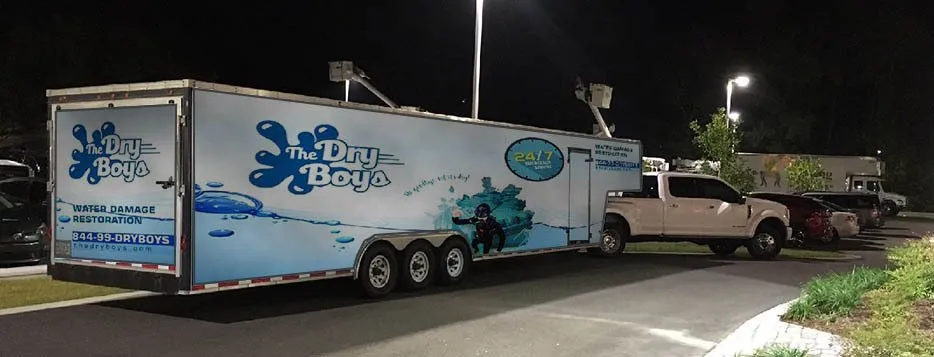
Look for companies whose primary work is restoration. Their trucks, equipment, and team should reflect that focus.
6. Local Presence
Restoration jobs run for days or weeks. Equipment needs daily monitoring. Issues come up that need fast response. A contractor based 50 miles away will be slower to respond, less invested in their reputation in your community, and more expensive (mileage gets passed through somehow).
Local contractors care about local reputation because their next job depends on what your neighbor heard about this one.
7. Real Reviews From Real Clients
Google reviews, Better Business Bureau records, and platforms like Expertise.com all provide useful signal — especially when reviews mention specific details (technician names, project details, timeline) that suggest authentic experience. Watch out for review profiles that are very short, very generic, or all clustered in time.
8. BBB Accreditation and Recognition
BBB accreditation requires the company to meet ethical standards and respond to complaints. It's not a guarantee of quality, but it's a baseline of accountability. Industry recognition (Expertise.com top lists, peer awards, certifications beyond IICRC) is additional signal.
9. Honest Communication
Water damage jobs involve explaining unfamiliar concepts, scope decisions, and timelines to a stressed homeowner. Listen for whether the contractor explains things clearly, answers questions directly, and gives realistic expectations rather than telling you what you want to hear. Contractors who oversell what they can do, underestimate timelines, or quote suspiciously low up-front numbers usually disappoint at the end.
10. The Phone Call Test
Call. Ask three or four questions about the work — Category and Class classification, equipment they use, how moisture monitoring works, what their typical timeline is. The answers tell you a lot. A contractor who can clearly explain technical aspects of the work in plain language probably knows what they're doing. One who deflects, oversimplifies, or admits ignorance probably doesn't.
The Dry Boys of Albany meets all of these criteria — IICRC Certified, 24/7 owner-answered phones, BBB Accredited, Top Mold Remediation Company in Albany 2023 by Expertise.com, locally operated, insurance-direct billing. Call 518-788-7261 any hour and put us through the same evaluation.