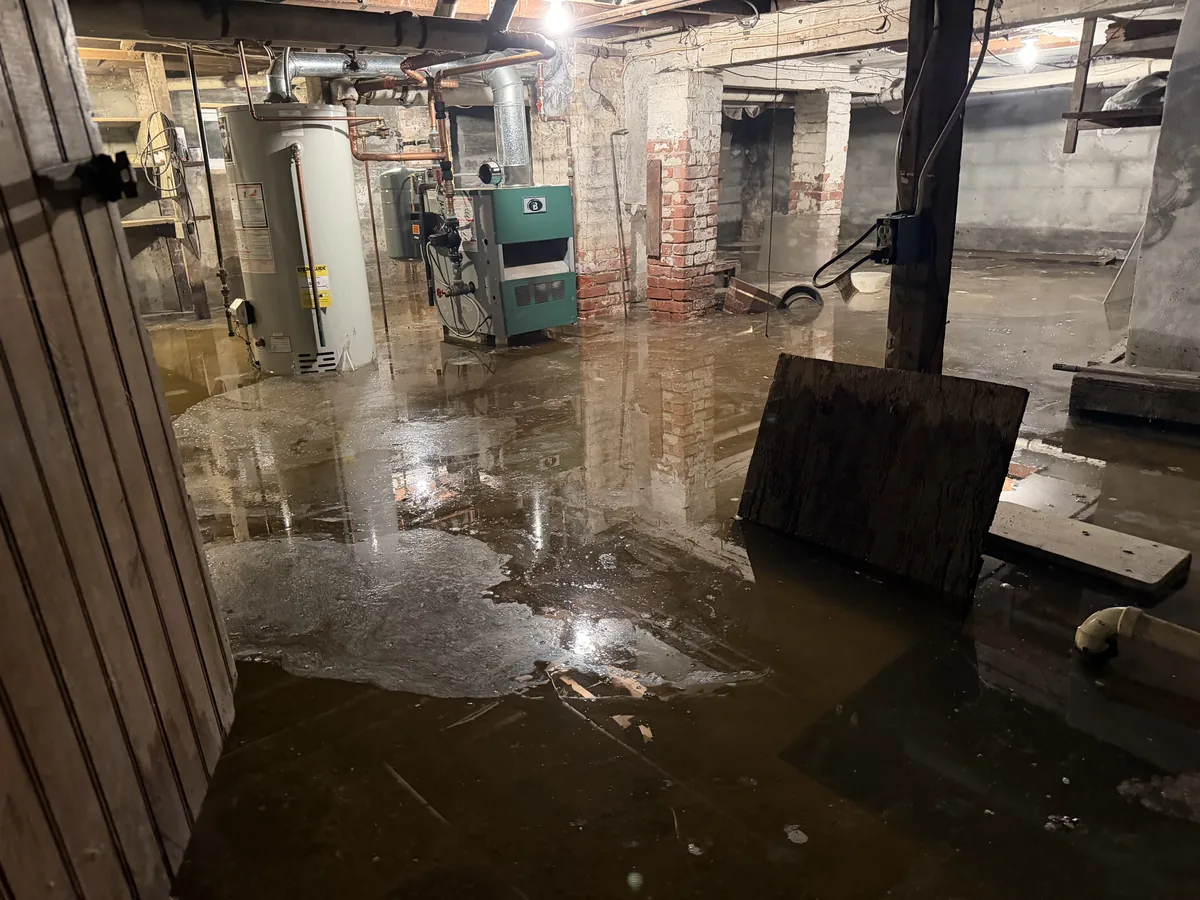
Emergency Water Damage Help — Right Now
Active flood, leak, or sewer backup? Call us first. The Dry Boys of Albany dispatches 24 hours a day across the entire Capital Region.
⚠ Active emergency right now? Skip the form — call directly.
518-788-7261First 60 Minutes
What to Do Right Now
Water emergencies are stressful. The first hour decides how much damage becomes permanent. Here's exactly what to do — and what NOT to do — until our crew arrives.
Step 1 · Make sure everyone is safe
Get people and pets out of the affected area first. Standing water plus electricity is the single biggest hazard in any flooded space. If you can do it safely, kill power to the affected area at the breaker panel. If the panel itself is in a flooded basement — don't go down there. Call us, we'll talk through it.
Step 2 · Stop the source if you safely can
Burst pipe? Shut off the main water valve to the house. It's usually in the basement near where the water line enters, or outside near the meter.
Appliance leak? Shut off the supply valve behind the appliance. Dishwashers and washing machines have valves under the sink or behind the unit.
Sewer backup? Stop using all water in the house immediately. Don't flush, don't run faucets, don't run the dishwasher. Every gallon used adds to the backup.
Roof leak / storm damage? Catch what you can with buckets and tarps. Move what you can away from the drip path.
Step 3 · Call us
Call 518-788-7261. A real person will pick up, take the basics, and dispatch a crew. Most calls in Albany, Schenectady, Saratoga, and Rensselaer counties get on-site help in under 90 minutes.
Step 4 · Document while you wait
Take photos and video of everything before you move it. Insurance adjusters want to see the damage in place. Wide shots of the room. Close-ups of damaged contents. Photos of the source if visible (the burst pipe, the leaking appliance, the failed sump pump).
Step 5 · Move what you can
If safely possible, move dry contents out of the affected area. Lift heavy furniture onto blocks of wood or styrofoam to break contact with wet flooring. Pull rugs off the floor. Open windows and doors to start ventilation if outdoor air is dry.
What NOT to Do
- Don't enter standing water if power is on. Outlets near the floor, plugged-in appliances, and submerged extension cords all create electrocution risk.
- Don't use a household vacuum on wet surfaces. They aren't built for water and you'll destroy the motor — or worse.
- Don't use bleach on mold. It doesn't kill mold at the root, just bleaches the visible surface. Spores spread, growth continues underneath.
- Don't run the central HVAC if you suspect mold or sewer contamination. The system will pull contaminants and spores throughout the house.
- Don't wait it out. Mold growth begins within 24–48 hours of water exposure. Every hour matters.
- Don't sign anything from a "storm chaser" company that knocks on your door. Reputable restoration companies don't door-knock after disasters.
Common Capital Region Emergencies
Some emergencies show up every winter and every spring in this region. We're set up for all of them:
- Frozen burst pipes — cold snaps in January and February. Pipes in unheated basements, crawlspaces, and exterior walls.
- Ice dam leaks — late winter. Water backs up under shingles and shows up on ceilings inside.
- Spring snowmelt flooding — March and April. Sump pumps fail, basements take on water through foundation cracks.
- Heavy thunderstorm flooding — summer. Sudden 2-3 inch rainfall events overwhelm drainage.
- Sewer backups — year-round, but spike during heavy rain when municipal lines are at capacity.
- Appliance failures — year-round. Dishwasher hoses, washing machine fittings, water heater leaks.