Dehumidification & Structural Drying
Commercial Phoenix and Dri-Eaz dehumidifiers, high-velocity air movers, HEPA scrubbers — sized to affected square footage and IICRC Class of damage.
Structural Drying Specialists
Dehumidification & Structural Drying
Drying is the part of restoration that most companies do badly — because it looks simple from the outside. Set up some fans, run a dehumidifier, come back in a few days. In reality, structural drying is where IICRC certification, equipment quality, and operator experience separate jobs that come back from jobs that get done right the first time.
The Dry Boys of Albany follows IICRC S500 drying protocols on every job. Equipment is sized to the affected square footage and Class of damage. Moisture is monitored daily. The job ends when target moisture content is reached on every affected surface — not when the calendar says it should be over.
The IICRC Class System
Every wet structure is classified by how much water has been absorbed and how fast it will release. Class determines equipment count, drying time, and ultimately cost.
- Class 1: Minimal water absorption. Less than 5% of combined floor, wall, and ceiling area in the affected room. Lowest moisture absorption in materials. Quick dry-out, minimal equipment.
- Class 2: Significant absorption. Wet carpet, cushion, sub-floor, drywall to 24". Water has been absorbed into porous materials. Standard residential basement flood territory.
- Class 3: Greatest amount of water absorption. Water above ceiling level, saturated walls and insulation. Often requires demolition before drying.
- Class 4: Specialty drying. Materials with low porosity that hold water — hardwood, plaster, brick, concrete, stone. Requires specialty equipment and longer drying times.
Our Equipment
LGR (Low Grain Refrigerant) Dehumidifiers
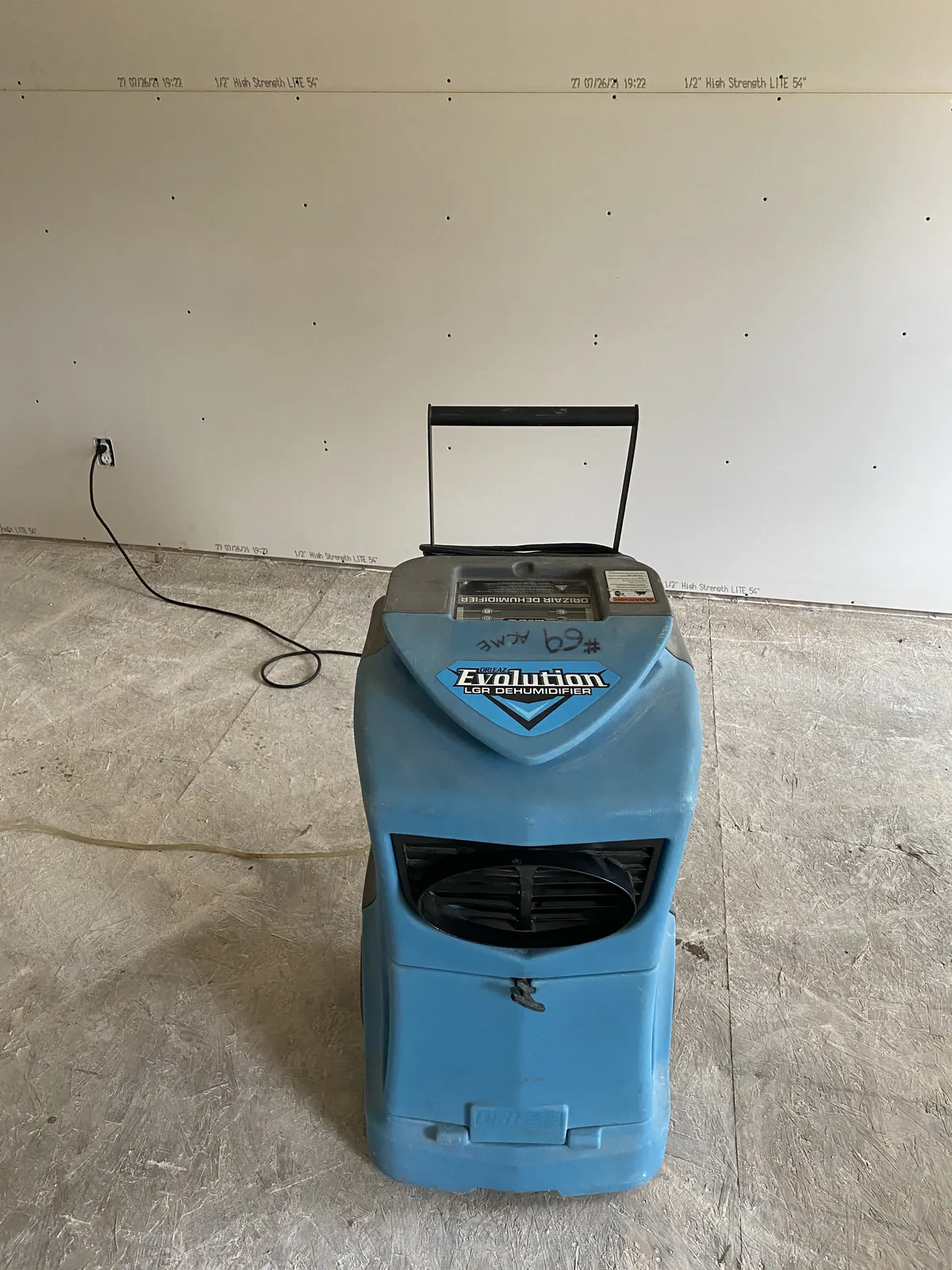
The Dry Boys fleet runs Phoenix and Dri-Eaz Evolution LGR dehumidifiers — the standard for professional water damage drying. LGR units pull moisture out of air much more efficiently than consumer dehumidifiers, especially at the lower humidity levels needed at the end of a drying job.
Desiccant Dehumidifiers
For Class 4 specialty drying — hardwood, plaster, masonry — desiccant units pull moisture chemically rather than through condensation. They work effectively at low temperatures and at very low humidity targets where LGR units lose efficiency.
High-Velocity Air Movers
Centrifugal and axial air movers, sized and positioned to create the airflow patterns needed to release moisture from materials into the air, where the dehumidifiers can capture it. Equipment count is calculated by Class and by linear feet of wet wall.
HEPA Air Scrubbers
For any job involving Category 2 or 3 water, mold concerns, or sensitive occupants, HEPA scrubbers run continuously to filter airborne particulates and spores out of the work environment.
Heated Drying for Tough Materials
For hardwood floors and other slow-drying materials, controlled heat acceleration can release moisture without damaging the material itself. We use this approach surgically — never as a shortcut.
Daily Moisture Monitoring
Equipment placement isn't a one-time decision. Materials dry at different rates, and once the easy moisture is gone, equipment needs to be repositioned to focus on remaining wet zones. Our crews return daily during active drying to:
- Take moisture readings on every affected surface with calibrated meters
- Compare readings against drying targets and previous-day values
- Reposition air movers and dehumidifiers to focus on slow-drying areas
- Remove equipment from areas that have hit target moisture content
- Update the documentation file the insurance carrier will see
How Long Does Drying Take
For a standard Capital Region residential basement flood:
- Class 1: 1–2 days
- Class 2: 3–5 days (most common)
- Class 3: 5–7 days
- Class 4: 7–14+ days (specialty drying for hardwood, plaster, masonry)
Faster initial response reduces these times — water that's been sitting for a week is much harder to remove than water that's been sitting for 6 hours.
The "Done" Standard
Equipment doesn't come out until moisture meters confirm target moisture content on every affected surface. For drywall that means equilibrium with surrounding unaffected drywall. For framing it means under 16% moisture content. For sub-flooring and hardwood it means full equilibrium with surrounding unaffected materials.
This is the operating commitment behind "No Good-Bye 'till it's Dry." Premature equipment removal is the single most common cause of secondary mold growth. We don't do that.
Ready When You Are
Request a Free Estimate for This Service
Same-day callback, free on-site assessment, direct insurance billing on covered claims. Real humans on every call at 518-788-7261.
Why homeowners across the Capital Region call us
The Dry Boys of Albany handles water damage, mold, and structural drying jobs from Albany, Troy, Schenectady, and Saratoga Springs out to Glens Falls, Hudson, Amsterdam, and beyond. IICRC-certified crews, and equipment sized to the job.