Water Damage Categories & Classes
The IICRC classification system explained in plain English — what it means for your home, your insurance claim, and what gets saved versus replaced.
IICRC Categories & Classes
Water Damage Categories & Classes — What They Mean for Your Job
The IICRC S500 standard classifies every water damage event in two ways: by Category (the contamination level of the water) and by Class (the amount of absorption into materials). Together they determine how the job is handled, what materials can be salvaged, how much equipment is needed, and ultimately what it costs.
Water Categories — Contamination Level
Category 1 · Clean Water
Water from a sanitary source — burst supply line, broken supply hose to a dishwasher or washing machine, ruptured water heater, sink overflow with clean water, melted snow, rainwater intrusion through a roof. No contamination concerns at the source.
Note: Clean water that sits for more than 48 hours generally degrades to Category 2 due to bacterial growth on wet substrates. Time matters.
Category 2 · Grey Water
Water with significant contamination that could cause illness if ingested, but doesn't contain raw sewage or sewage-source pathogens. Sources include:
- Discharge from washing machines or dishwashers
- Toilet bowl overflow with urine but no feces
- Aquarium or waterbed leaks
- Hydrostatic pressure seepage through foundations
- Category 1 water that has degraded over 48+ hours
Category 3 · Black Water
Grossly contaminated water that contains pathogens, harmful chemicals, or other hazardous agents. Sources include:
- Sewage backups
- Toilet overflow with feces
- Floodwater from rivers, lakes, or storm surge
- Standing water that has supported microbial growth (often "what was Category 2 a week ago")
Category 3 jobs require full PPE, containment, biocide treatment, and disposal of all porous materials that contacted the water.
Classes of Damage — Absorption Level
Class 1 · Minimal Absorption
Less than 5% of combined floor, wall, and ceiling area absorbed water. Materials with minimal moisture absorption — concrete, tile, sealed surfaces. Often a small leak caught quickly. Drying typically takes 1–2 days with minimal equipment.
Class 2 · Significant Absorption
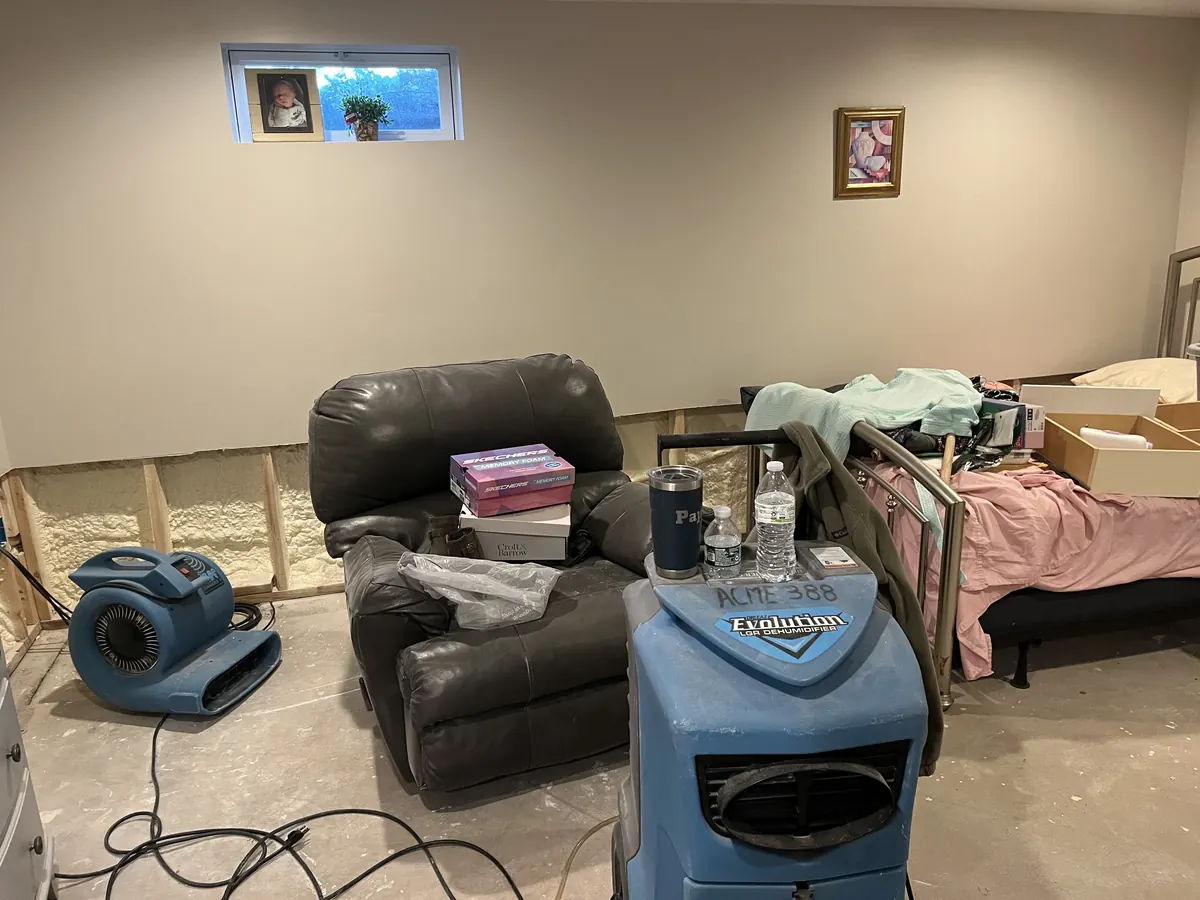
Wet carpet, cushion (pad), and sub-floor. Drywall wet to 24 inches above floor. Significant water absorbed into porous materials throughout the affected area. This is the most common Class for residential basement floods. Drying typically 3–5 days.
Class 3 · Greatest Water Absorption
Water from above — usually from a leak or pipe break in an upper floor. Affects ceiling, walls, insulation, sub-flooring, and contents below. Highest moisture content in the largest amount of material. Drying typically 5–7 days, often with some demolition.
Class 4 · Specialty Drying
Materials with low porosity holding water — hardwood flooring, plaster walls, brick, stone, concrete masonry. These materials release moisture very slowly and require specialty drying equipment (desiccant dehumidifiers, heat drying systems) and longer drying times — often 7–14+ days.
Why This Matters for Your Insurance Claim
Insurance carriers reimburse based on the documented Category and Class. A job that gets misclassified — or where the documentation is sloppy — can mean:
- Coverage denial for materials that actually needed to be removed
- Reimbursement at a lower drying class than the job actually required
- Disputes over scope between contractor and adjuster
- Out-of-pocket exposure for the homeowner
This is one of the practical advantages of working with an IICRC-certified firm — the documentation is set up the way carriers expect to see it, with photos, moisture readings, and scope reports that match the standard.
What to Do With This Information
You don't need to memorize the IICRC standard. But when a contractor scopes your water damage job, you can ask:
- What Category is the water?
- What Class is the damage?
- How is the equipment count calculated?
- What's the daily monitoring plan?
- What's the target moisture content for completion?
Any IICRC-certified firm can answer these immediately. If a contractor can't, that's a signal worth paying attention to.