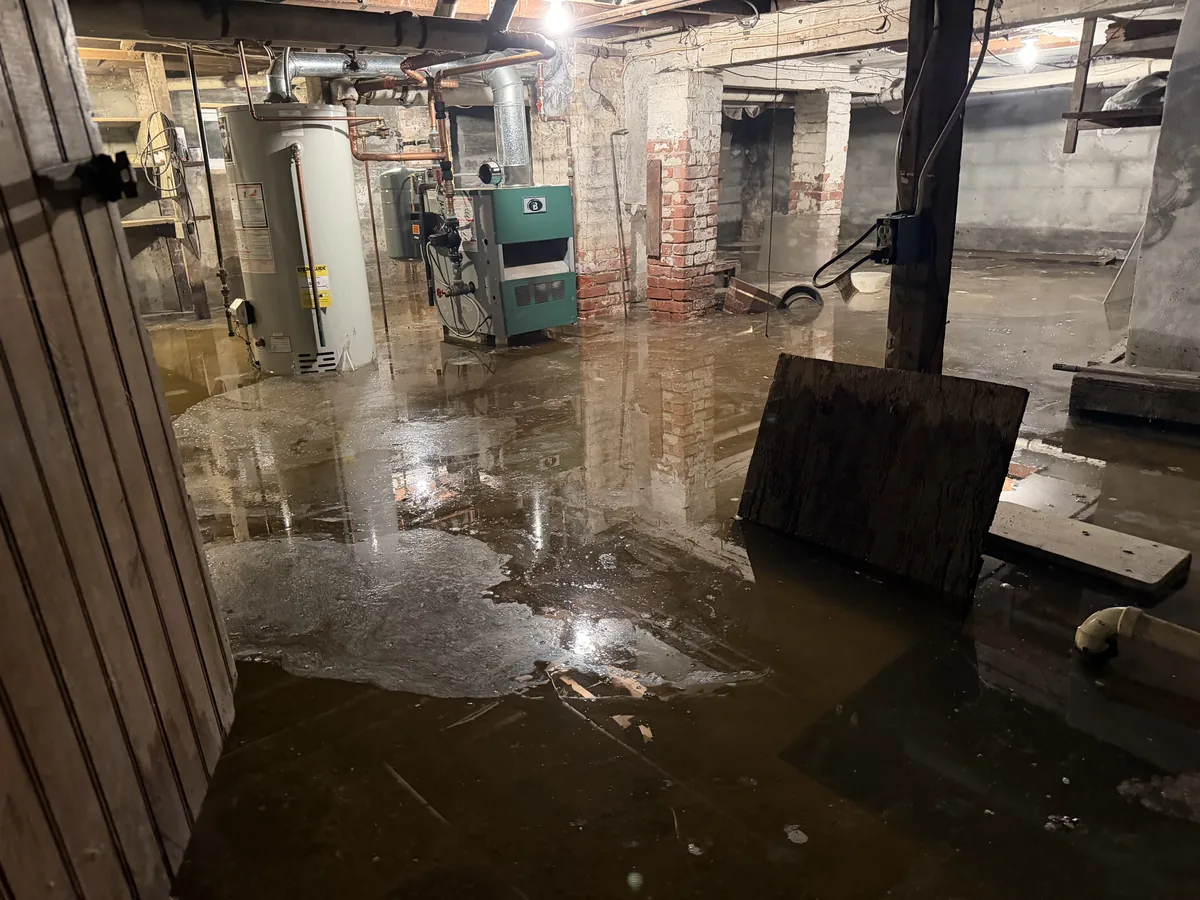
Need Emergency Water Damage Repair? Here's the Real Timeline
What's actually happening inside your home in the first hours and days after water damage — and why prompt response matters more than people think.
Water Damage · Albany NY
The Real Impact of Water Damage — Hour by Hour
Water damage is one of those problems where time is genuinely linear. Every hour the water is sitting, materials absorb more, surfaces degrade further, and what would have been a simple dry-out becomes a tear-out. Understanding what's actually happening inside your home in the first hours and days is what motivates the urgency.
Hour 0–4 · Initial Spread
Water spreads laterally fast — even a slow leak will cover a surprising area in the first hour. Carpet, cushion, and the bottom of drywall begin absorbing water almost immediately. Furniture in contact with the water starts wicking. Any books, papers, or fabric items absorb at the same rate as a sponge.
Most of the damage in this window is reversible if extraction starts promptly. Carpet that's been wet for under 4 hours with Category 1 water can usually be saved (cushion replaced). Hardwood that's been wet for 4 hours has moisture in the surface layer but rarely full saturation.
Hour 4–24 · Absorption
Drywall begins to swell and lose structural integrity. Wood framing absorbs water deeper into the grain. Sub-flooring (OSB and plywood) absorbs from the bottom up. Ceiling tiles wick water and become disposable. Particle board furniture starts to swell at edges.
This is the window where prompt extraction makes the biggest economic difference. Water extracted at hour 6 might save 80% of materials. The same job at hour 22 might be 50/50 save vs. tear-out.
Hour 24–48 · Microbial Activity Begins
This is the critical window where any wet substrate at room temperature begins supporting microbial growth. Mold spores, which exist on every surface in every home, find the moisture they need and begin colonizing. The colonies aren't visible yet, but they're establishing themselves in:
- Wet drywall paper backing
- Saturated insulation
- Carpet pad
- Wood framing in low-airflow areas
- Behind cabinets and built-ins
Materials that contacted Category 2 or 3 water need to come out within this window — they cannot be saved regardless of how they look.
Hour 48–72 · Visible Microbial Growth
Mold becomes visible to the naked eye. Drywall delaminates from framing. Hardwood begins cupping and warping. Furniture stains set permanently. Standing water that hasn't been extracted becomes increasingly contaminated as it supports its own microbial colonies — a Category 1 source that started clean is now functionally Category 2.
Day 4+ · Structural Damage
Wood framing develops measurable rot if it stays wet. Sub-flooring loses structural integrity. Hardwood is past the point of dry-and-save. Drywall throughout the affected zone is tear-out. Insulation has to come out across the entire wet area.
This is the territory where what could have been a $3,000 dry-out becomes a $20,000+ reconstruction project.
Week 2+ · Long-Term Issues
Mold colonies become well-established and start releasing spores into the air, spreading the problem to dry parts of the house. Wood members begin showing structural issues that affect the building. Indoor air quality degrades to the point where occupants may report symptoms. The job has now become a remediation project as much as a restoration project.
The Insurance Implication
Most homeowners policies require prompt notification and reasonable action to mitigate damage. Carriers can deny claims (or reduce payouts) when homeowners delay calling, fail to mitigate, or let a small problem become a much larger one. Calling a restoration contractor within hours, not days, isn't just better for the building — it's almost always better for the claim.
If you have water damage in your home and you're in the Capital Region, call 518-788-7261. The Dry Boys of Albany dispatches 24/7 with typical on-site response in 60–90 minutes.