Mold Removal & Remediation
Named Top Mold Remediation Company in Albany 2023 by Expertise.com. IICRC S520 containment, HEPA filtration, and root-cause removal — not surface cleaning.
IICRC S520 Certified
Mold Removal & Remediation in Albany NY
The Dry Boys of Albany was named Top Mold Remediation Company in Albany by Expertise.com in 2023. Mold remediation is one of the most misunderstood services in restoration — and one of the most botched when handled by general contractors or homeowners trying to save money. Mold isn't a cleanup problem; it's a containment problem.
What Mold Actually Is
Mold spores are everywhere — outside, inside, on every surface in every home in the Capital Region. They become a problem only when they find a wet substrate to colonize. Once a colony establishes itself, it produces millions more spores per day, and disturbing it (with a shop vac, a spray bottle of bleach, a fan, or a remodeling project) can spread those spores to areas that were previously fine.
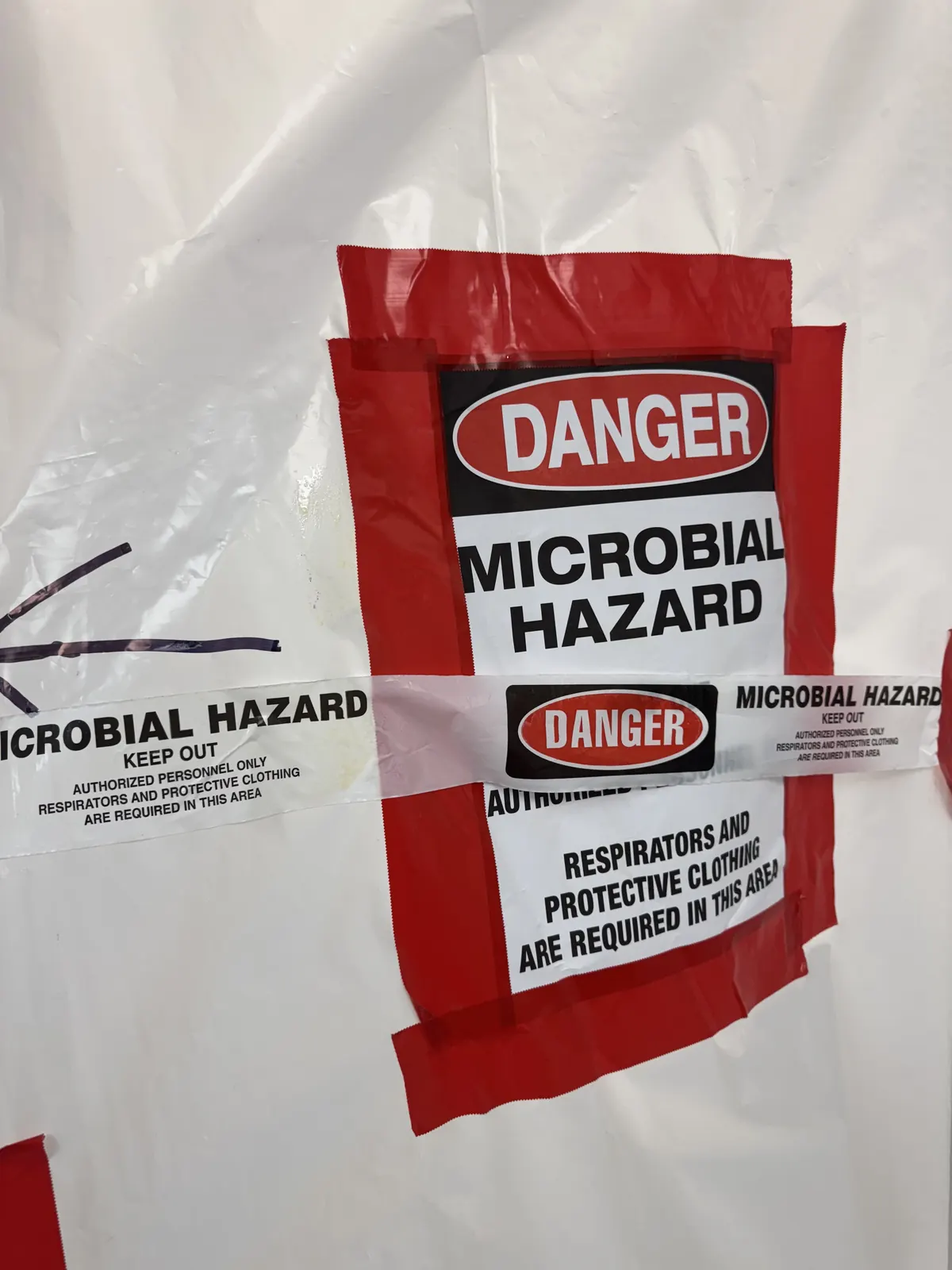
That's why professional remediation always starts with containment — not cleanup. We isolate the affected area with 6-mil polyethylene sheeting and negative-air HEPA scrubbers, so when we disturb the colony to remove it, the spores released don't migrate into the rest of the house.
When You Need Professional Mold Remediation
EPA guidance and IICRC S520 standards both recommend professional remediation any time:
- The affected area exceeds 10 square feet
- Mold is associated with sewage, heavy water damage, or hidden moisture
- HVAC ductwork is contaminated
- Anyone in the home has asthma, allergies, immune issues, or unexplained respiratory symptoms
- Mold is visibly present behind drywall, ceilings, or in wall cavities
- You're selling the house and need a clean inspection report
Our IICRC S520 Process
Inspection & testing
We start with a visual inspection plus moisture mapping with FLIR thermal imaging and Tramex meters. The inspection finds the moisture source — because if you don't fix the source, the mold comes back. When lab analysis is needed (usually for insurance or real estate transactions), we collect air samples and surface tape lifts and send them to a third-party accredited lab.
Containment & engineering controls
Six-mil polyethylene barriers with zipper entries seal the work area. Negative-air HEPA scrubbers run continuously, creating a pressure differential that pulls air into the work area, not out. This keeps spores released during removal from migrating to clean parts of the house.
Removal
Porous materials with established mold growth (drywall, insulation, carpet, ceiling tiles) come out and go directly into sealed bags. Semi-porous materials (wood framing, sub-flooring) are HEPA-vacuumed and treated with antimicrobial agents. Hard surfaces are wiped down with appropriate cleaners.
HEPA filtration & final cleaning
After removal the entire work area is HEPA-vacuumed (HEPA, not standard vacuum). Air scrubbers continue running through the cleaning phase. Every horizontal surface, every nook, every fixture is wiped down.
Post-remediation verification
Before tear-down of containment, we re-inspect for visual cleanliness and re-test air quality if testing was done initially. The remediation isn't complete until post-test results come back clean.
Why Bleach Is Not the Answer
This is the most common DIY mistake we see in Capital Region homes. Chlorine bleach does bleach the visible black surface of mold — but it doesn't kill the colony at the root, especially on porous materials like drywall and wood. The roots stay alive, the bleach evaporates, and the mold returns. Worse, bleach gives homeowners false confidence that they've solved the problem while the colony continues spreading inside the wall.
Professional antimicrobials used in IICRC S520 remediation are formulated specifically for mold roots on porous and semi-porous materials. They work — bleach doesn't.
Common Capital Region Mold Sources
From thousands of jobs across the region, the most common moisture sources we trace back to:
- Old, undersized, or failed sump pumps in below-grade basements
- Foundation cracks and chronic basement seepage in older Albany and Troy homes
- Slow plumbing leaks behind walls (sink supplies, toilet flanges, shower drains)
- Ice dam damage that introduces water into wall cavities
- Failed flashing around chimneys, skylights, and roof penetrations
- HVAC condensation — especially in finished basements with poor air exchange
- Roof leaks that have been "fixed" but introduced enough moisture to start a colony
Insurance & Mold
Mold coverage varies dramatically by policy. Most policies cover mold that results from a covered water loss (burst pipe, appliance failure) but exclude mold from chronic neglected leaks. We document the moisture source and timeline carefully — that documentation is often what determines whether the claim goes through.
Ready When You Are
Request a Free Estimate for This Service
Same-day callback, free on-site assessment, direct insurance billing on covered claims. Real humans on every call at 518-788-7261.
Why homeowners across the Capital Region call us
The Dry Boys of Albany handles water damage, mold, and structural drying jobs from Albany, Troy, Schenectady, and Saratoga Springs out to Glens Falls, Hudson, Amsterdam, and beyond. IICRC-certified crews, and equipment sized to the job.